Team Health
Basics
Why the 6-Month Feedback Loop is Killing Your Hybrid Culture
Why the 6-Month Feedback Loop Is Killing Your Hybrid Culture
For most organisations, the way employee feedback is gathered has not materially changed in over a decade. Quarterly pulse surveys and annual engagement studies are still treated as the primary instruments for understanding how teams are doing, how managers are performing, and where cultural risks might be emerging. That model was designed for a slower, co-located world, where work rhythms were predictable and problems surfaced visibly through attendance, behaviour, and informal conversation.
Hybrid work has fundamentally broken that assumption.
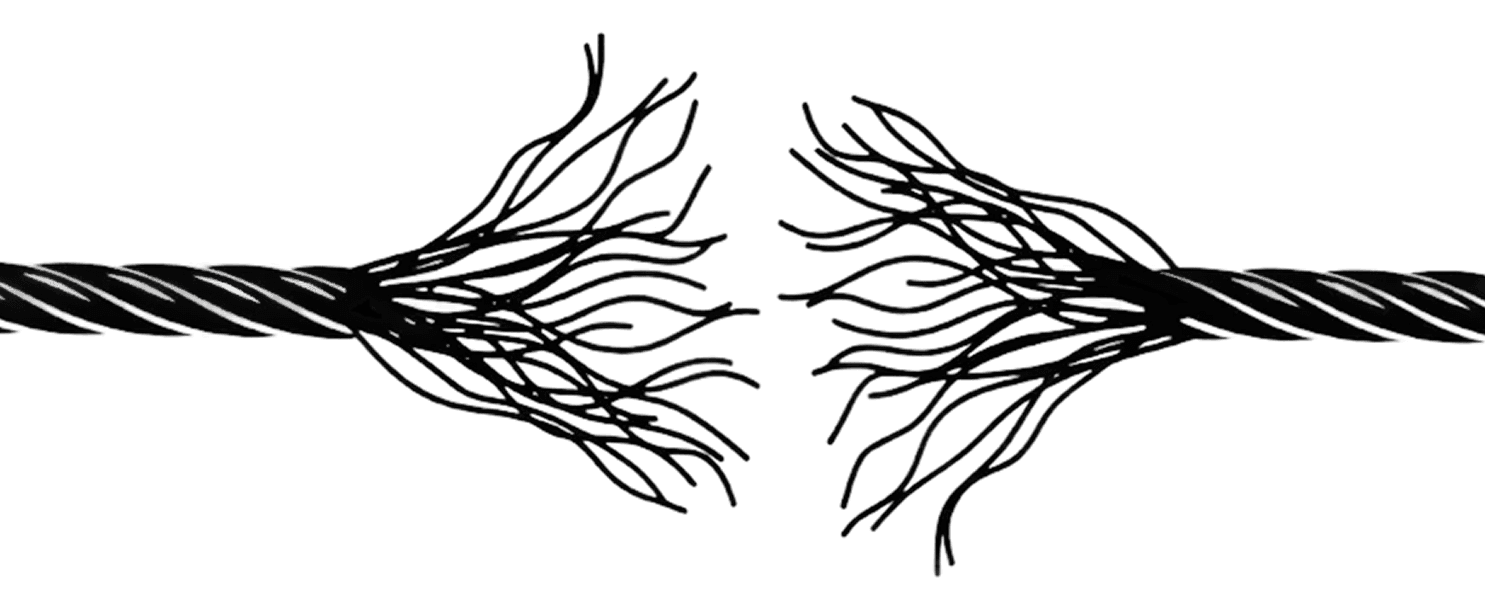
In 2026, the pace of work has accelerated to a point where the traditional feedback loop is no longer merely inefficient; it is structurally misaligned with reality. Teams operate across time zones, projects move in short cycles, and pressure accumulates unevenly across distributed groups. When organisations wait months to understand how their people are coping, they are not managing team health in real time. They are reconstructing it after the fact.
The Speed of Work Has Outpaced the Speed of Measurement
Hybrid teams experience meaningful shifts in sentiment far more frequently than most leaders realise. A demanding sprint, a critical release, a staffing gap caused by regional leave, or a single poorly handled incident can materially change how a team feels and functions in a matter of days. Within a 72-hour window, engagement levels can drop, communication patterns can narrow, and friction between individuals or functions can increase.
The problem is not that these signals fail to appear. The problem is that most organisations are simply not equipped to see them when they matter.
By the time a quarterly pulse is distributed, completed, analysed, and socialised, the moment that created the shift has already passed. Any response is, by definition, reactive. The organisation is left interpreting sentiment that no longer accurately reflects the current state of the team. In a hybrid environment, this lag is not a minor inconvenience. It is the difference between prevention and damage control.
Feedback Data Decays Faster Than We Admit
All feedback data has a half-life. The longer the delay between experience and measurement, the less reliable the signal becomes. Employees forget specifics, reinterpret events, or temper their responses in hindsight. Some disengage from the process altogether. What begins as an attempt to capture lived experience gradually turns into an abstract summary of how people remember feeling weeks or months ago.
Hybrid work accelerates this decay. Informal feedback loops are weaker, context is fragmented, and memory is shaped by asynchronous communication. When organisations rely on delayed surveys to understand fast-moving environments, they are often working with data that is technically accurate but operationally useless.
The result is leadership teams making decisions based on lagging indicators while the real issues continue to compound unnoticed.
The Pattern of Silent Attrition
One of the most damaging consequences of delayed feedback is what might be called silent attrition. High performers rarely announce disengagement through formal channels. They are unlikely to use surveys as a vehicle for complaint, and they seldom flag dissatisfaction in explicit terms.
Instead, disengagement shows up behaviourally first.
Response times lengthen. Participation in group discussions drops. Initiative declines. Cross-team collaboration becomes transactional rather than generative. In tools like Slack or Microsoft Teams, the signals are subtle but consistent: fewer messages, less spontaneity, narrower interaction patterns.
By the time attrition becomes visible in HR metrics, the organisation is already reacting to an outcome rather than addressing a cause. This is why departures so often feel unexpected, even in teams that appeared stable on paper. The early signals were present, but they were never surfaced in time.
Why Survey Fatigue Is a Symptom, Not the Core Issue
Declining survey response rates are often attributed to fatigue caused by excessive frequency or poorly designed questionnaires. While those factors matter, they are rarely the root cause. Employees disengage from surveys when they perceive that their input does not lead to meaningful action.
When feedback is collected, analysed, and archived without visible impact, surveys begin to feel performative rather than purposeful. Over time, participation drops not because people lack opinions, but because they lack confidence that those opinions will change anything.
In this context, shortening surveys or adjusting cadence does little to address the underlying problem. The issue is not how feedback is collected. It is how late it arrives and how disconnected it is from day-to-day work.
From Opinion to Observation
The next evolution in understanding team health is not about collecting more opinions. It is about observing how work actually happens.
Every hybrid organisation already generates a continuous stream of behavioural data through its collaboration tools. Communication patterns, focus fragmentation, collaboration density, and friction points are all visible in the way teams operate, regardless of whether anyone fills out a form. These are passive signals, and they exist independently of self-reporting.
This does not eliminate the value of surveys, but it reframes their role. Opinion-based feedback becomes a complement rather than the primary source of truth. The foundation shifts toward real-time behavioural insight that reflects how teams function under actual working conditions.
Health, in this model, is not inferred solely from what people say at fixed intervals. It is understood through how work unfolds continuously.
Shortening the Feedback Loop
Organisations that are adapting successfully to hybrid work are not those collecting more data. They are those reducing the time between experience and visibility. By shortening the feedback loop, they are able to identify risk earlier, support managers more effectively, and intervene before disengagement turns into attrition.
This shift from delayed sentiment to real-time signals represents a structural change in how team health is managed. It acknowledges that in a fast-moving, distributed environment, timing is as critical as accuracy.
The question for leaders in 2026 is no longer whether feedback matters. It is whether their feedback systems operate at the same speed as their teams.
If you want to explore how team health can be assessed in seconds rather than months, and understand the core signals that matter most, subscribe to the Insights Hub for the “10 Second Team Health” framework.
Because in hybrid work, the cost of seeing too late is far higher than the cost of seeing early.

More Insights
Manager Effectiveness KPIs: What to Actually Measure in a Hybrid Team
Pro Tips
Read Blog
Why Your Annual Engagement Survey Is Failing
Basics
Read Blog
Manager Impact on Employee Retention
Pro Tips
Read Blog
Why Surveys Fail to Stop Burnout
Team Health
Read Blog
How to Implement People Analytics Without “Big Brother” Vibes
Pro Tips
Read Blog
The Lagging Indicator Problem: Why Surveys Fail to Stop Burnout
Pro Tips
Read Blog
The SPACE Framework Explained: An Engineering Leader’s Guide to Team Health
Team Health
Read Blog
Using Predictive Signals to Identify Quiet Quitting Before the Attrition Spike
Team Health
Read Blog

Top 5 Manager Blind Spots in Remote Team Management
Pro Tips
Read Blog
A New Framework for Manager Effectiveness in 2026
Team Health
Read Blog
Why the 6-Month Feedback Loop is Killing Your Hybrid Culture
Team Health
Basics
Read Blog
Book A Demo